
No Time to Hurry
I've no time to hurry.
This is a club that researches, tries out and honestly questions the philosophy of slow living. What is slow living, who actually lives this way, is it really sustainable — and where exactly do I stand? It's all here, in plain language.
The short versionFirst things first
What is slow living?
Slow living isn't about doing everything slowly. It's living life at a tempo set by your own conscious choices, not by speed. In other words, you decide what to do and how fast: you speed some things up, and live others fully, without rushing.
At its core there's a single question: are we spending life like a "to-do list" to be finished as fast as possible, or are we actually in it? Slow living is the effort to choose the second.
And let's be clear about this too
So what is it not?
Slow living is not quitting everything to move to a village. It is not laziness. It is not hostility to technology. And it is not withdrawing from the world.
On the contrary: it's staying right in the middle of work, the city and the screens — and not losing your own rhythm in that noise.
Examples
So who actually lives like this?
Quite a few movements around the world have embraced this philosophy. The slow food movement defends the local and the seasonal against industrial food. Slow fashion favours dressing with less but better, instead of fast consumption. Digital minimalists, meanwhile, don't reject technology; they use it as a tool, and don't become tools themselves.
What they share is their view of technology: not an enemy, but not a master either. They make use of it, and pull the plug once the job is done.
The good side: a more conscious, less burned-out life. The weak side: this philosophy can easily turn into a "luxury" or a status symbol — expensive organic products, a nicely-filtered marketing of "slowness".
And sustainability?
Is this really sustainable?
The best-known institutional example is the Cittaslow (Slow City) movement. It was born in Italy; in Turkey, towns like Seferihisar, Akyaka and Halfeti are part of the network. The aim is to protect local architecture, craft and daily rhythm against the uniformity of globalisation.
The good side: local culture and texture are preserved, life stays on a human scale. But there's a contradiction: once a place is declared a "slow city" it's flooded with tourists, house prices shoot up, and "slowness" gets consumed fast as a weekend getaway. Sometimes the cure turns into the disease.
So where do I stand?
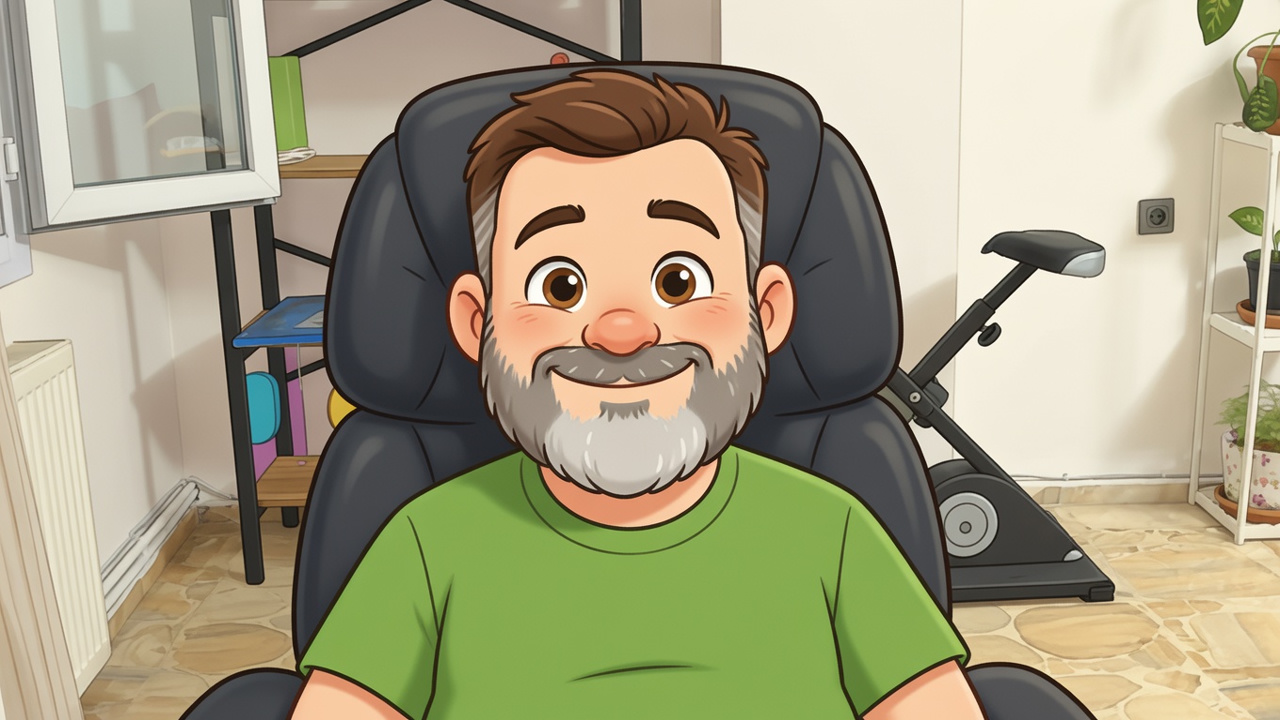
I'm Murat. Let me be honest: I don't see myself as a wholehearted "slow-liver". I'm interested, I'm curious — but I still live largely by the rules of fast life. I agree with some parts of this philosophy with all my heart, and with others not at all.
Would I want to spend my life somewhere like Halfeti, cut off from social life, just because it's calm? Honestly, I'm not sure. And that's exactly why this isn't a sermon — it's a field journal I keep with my agreements and disagreements, my hesitations and all. Read it if you like; or look around a little and leave, that's fine too.
Let me also say this up front: I'm not selling any product here; I have no political aim and no hidden agenda. I'm not doing this research and work out of any financial concern, and nobody signing up here adds a thing to me.
I have just one goal: to share the studies, analyses and conclusions I make on whatever subject I'm into right now — and to record my own graph of change. As you'd expect, there's a software developer in me; and for a developer, measuring everything you do is a must. So I'm measuring my own change.
Anyone who likes can join me on this research journey and contribute with their comments and experience. The choice is entirely yours.
Want to join this journal?
Let's meet in the moments we pull the plug on the machine. Leave your email and I'll let you know when a new piece drops. I don't write often — I'm in no hurry anyway.